Nanyan Industry Zone, Xinchang City,ZheJiang,China
Shackles
Chain Hoist Controllers provide the most compliant method of powering and controlling electric hoist lifting systems. Options include multiple channels and either fixed or variable speed.
Chain Hoist Controllers provide the most compliant method of powering and controlling electric hoist lifting systems. Options include multiple channels and either fixed or variable speed.
Round Web Sling
Shackles
Ratchet Tie Down
Hoist Cable
I-beam Clamp
Why Choose Us
● Quality Assurance
We have a rigorous quality assurance process in place to ensure that all our services meet the highest standards of quality. Our team of quality analysts checks each project thoroughly before it is delivered to the client.
● State-of-the-art Technology
We use the latest technology and tools to deliver high quality services. Our team is well-versed in the latest trends and advancements in technology and uses them to provide the best results.
● World-Wide Expertise
We know international markets and trends. Our expertise, experience and network cover all corners of the world.
● Competitive Pricing
We offer competitive pricing for our services without compromising on quality. Our prices are transparent, and we do not believe in hidden charges or fees.
Advantages of Shackles
● Durability: These steel connections can hold thousands of pounds.
● Ease of use: Shackles let you easily hook your load to a crane or other equipment.
● Safety: These tools protect workers by offering a secure attachment point for loads.
What Are Shackles Used For?
Shackles are used in many industrial and commercial activities - with the alloy steel variants being used for overhead lifting & rigging applications. It is important to note that not all shackles are made equal and only shackles that have been tested, Tagged and have a stamped WLL should be used for overhead lifting.
Light duty commercial variants are commonly used with light tow ropes, personal protective equipment and for rigging in recreational equipment. These should in no circumstances be used in lifting applications.
Shackles offer an ideal solution for overhead lifting, securing and rigging work. They are most often used with other lifting equipment such as chains, wire rope and fibre ropes in lifting slings or with webbing straps. Shackles offer a reliable and secure attachment point between the sling and the object to be lifted.
Shackles are also available in a range of other finishes including;
Stainless steel
Zinc plated
Alloy Steel
Nine Important Rules to Follow When Using Shackles
1
When making a sling, attach multiple sling legs to the bow, not the pin. Attaching legs to the pin can damage and weaken the sling.
2
When point loading shackle to shackle, connect bow to bow or bow to pin. Never connect pin to pin.
3
Do not side load "D" shaped shackles such as chain shackles or long reach shackles. These shackles are designed and rated for in-line applied tension. Therefore, the center line of the load should coincide with the center line of the shackle. Anchor body style shackles (screw pin style, as pictured above, or bolt nut cotter anchor body style) can be side loaded. Always refer to reductions in rating charts when performing this type of rigging.
4
When securing a load, the bow of the shackle should be put into the running side of a choke.
5
When using a shackle with wire rope, the shackle must be equal to or larger than the wire rope diameter.
6
If using a shackle with synthetic slings, ensure the shackle is big enough to avoid pinching or binding the sling.
7
Shackles should not be subjected to high or low temperatures that could affect thermal treatment and the strength of the shackle. -4 degrees F to 400 degrees F is the operating range for full working load limit.
8
Always ensure shackle pins are properly engaged. Screw pin shackles need to have threads fully engaged on the shackle ear. (The pin should be flush with the outside of the shackle body or slightly past). The pin head should make contact with the shackle body. Bolt nut and cotter shackles need to have the bolt and nut properly secured with the cotter pin attached.
9
Use bolt nut cotter anchor style shackles, if shackles will remain in place as a semi-permanent application or if they will be suspending a load. Screw pin shackles are used when the shackles are removed after the lift is complete. If a screw pin shackle is being used to suspend the load for any length of time, it is advisable that you mouse or tie off the pin to the body of the shackle with wire.
What are the Applications of Shackles
Shackles are metal connectors with a hinged opening, typically used for securing ropes or chains. They are commonly found in a variety of applications, including:
● Maritime and rigging: Shackles are extensively used in marine environments to connect ropes, chains, and other rigging equipment. They are often used to secure anchors, mooring lines, and towing cables.
● Construction: Shackles are used in construction to connect steel cables, lifting slings, and other lifting equipment. They provide a strong and secure connection point for lifting heavy loads.
● Transportation: Shackles are also used in the transportation industry, particularly for securing loads on trucks, trailers, and other vehicles. They are used to attach chains, straps, or other restraining devices to the load.
● Industrial applications: Shackles are commonly used in various industrial applications, such as overhead cranes, hoists, and pulley systems. They provide a reliable means of connecting and securing components in these systems.
● Recreational activities: Shackles are also used in recreational activities, such as sailing, climbing, and rigging hammocks. They provide a convenient and adjustable way to secure ropes and other equipment.
Safety, Inspection and Maintenance for Shackle Use
Because shackles are so often used for critical and intensive lifting and rigging applications, it's extremely important to make sure you follow some basic safety checks and upkeep rules in order to guarantee more consistent levels of performance over time.
Shackles should be inspected regularly for any signs of general wear, tear and fatigue. Potential points of damage or failure for all shackle types can occur in the body, the pin, or in the eye or pin holes, and it's important to monitor these areas especially closely over the working lifetime of all shackles.
In particular, inspect shackles carefully for any signs of bending, warping or stretching, which may indicate that the shackle is not coping sufficiently well with the load forces being placed on it. Bent shackles tend to be a sign of excessive side-loading forces, which can ultimately lead to catastrophic failure (particularly of D-shackles), while distorted or fractured pins should be replaced immediately.
Even if a pin remains entirely intact, it may not seat properly in the shackle if it's even slightly warped from its original shape, which dramatically increases the risk of loosening under load. Shackle pins should never be forced or hammered into place if they're reluctant to seat properly, and must never be replaced with a stand-in piece of hardware that wasn't designed explicitly for that purpose and shackle type.
How Can Businesses Use Shackles?
Your business can use shackles for several industrial applications, including: Lifting objects: Shackles collaborate with cranes and other lifting equipment to raise heavy objects. Securing loads: These tools can connect wires, straps or ropes to contain a heavy load. Towing vehicles: Shackles can help you attach equipment to towing vehicles for easier transportation.
When using shackles for lifting or for other uses, inspecting them for damage is critical for safety. Replace these tools when they show signs of disformity, like bending or warping.
How to Use Shackles
While shackles themselves are quite straightforward pieces of equipment and relatively easy to use in most applications, the key to using them well is to know which kind of shackle is best suited to which kind of job.
Certain configurations of pins and shackle types are ideal for use in temporary tie-down or rigging arrangements, for example, while for permanent fixtures or much heavier lifting, other varieties of shackles and bolts must be used for improved safety.
For all shackle types, there are some widely accepted codes of best practice and safe use that should always be observed: ALWAYS
Perform a visual inspection of shackles prior to starting any lift (as required by law.) ALWAYS
Pay close attention to the manufacturer specifications for reduction in safe working capacities when operating under any degree of side load. DON'T
Perform the lift if any shackle fails to meet the required safety standards or appears to show signs of excessive wear. BE SURE
To connect multiple sling legs to the body of the shackle, and never to the pin itself. ALWAYS
Make sure you're using the correct size of shackle for the hook or sling straps being attached. NEVER
Run a strap or sling body over a screw-type shackle pin, as it can move under load and eventually back the pin out of its threading.
Factors to Consider When Selecting Shackles
When selecting shackles, there are several factors to consider to ensure you choose the right type for your application. Here are some key factors to keep in mind:
■ 1.Material: Shackles are typically made from high-strength materials such as carbon steel or stainless steel. Carbon steel is stronger but more susceptible to corrosion, while stainless steel offers better corrosion resistance but may not be as strong. Consider the environment in which the shackle will be used and choose a material that can withstand the conditions.
■ 2.Working Load Limit (WLL): This refers to the maximum weight that the shackle is designed to support safely. It's important to choose a shackle with a WLL that exceeds the expected loads to ensure a margin of safety.
■ 3.Size and Dimensions: Shackles come in different sizes, with varying pin diameters and body widths. Choose a size that is appropriate for your application, considering the thickness of the rope or chain you'll be using and the space available for the shackle.
■ 4.Type of Shackle: There are several types of shackles available, including D-shackles, bow shackles, and anchor shackles. Each type has its own advantages and disadvantages, so choose the one that best suits your needs.
■ 5.Certification and Standards: Look for shackles that meet industry standards and are certified by recognized organizations. This ensures that the shackles have been tested and meet minimum safety requirements.
■ 6.Corrosion Resistance: If the shackle will be used in a corrosive environment, such as saltwater or chemical exposure, choose a shackle with corrosion-resistant properties. Stainless steel or galvanized shackles are good options in these cases.
■ 7.Pin Retention: Some shackles have pins that are held in place by screws or bolts, while others have pins that are held captive within the shackle body. Choose a shackle with a pin retention system that suits your application and safety requirements.
■ 8.Ease of Inspection: Shackles should be inspected regularly for wear and damage. Choose a shackle design that allows for easy visual inspection of all critical components, including the pin and body.
16 Rules to Remember When Using Shackles
Here are some general tips to remember when using shackles in any setting. Safety First
When it comes to using shackles, safety should always be your top priority. That means never exceeding the working load limit and avoiding shock loading.
Each shackle has a working load limit (WLL), which is the maximum weight that the shackle can safely support. Do not try to lift more than the WLL, as this could cause the shackle to fail and injure anyone nearby.
You should also inspect the shackle before each use, and if necessary, use spacers to prevent the shackle from being loaded at an angle. Additionally, keep in mind that shackles can be damaged by exposure to extreme temperatures, so avoid using them in excessively hot or cold environments.
Many of the rules we'll go through below are designed with regard to safety, while others are more for productivity's sake or for the longevity of your shackles. No matter what, though, it's important that you keep operator safety – particularly the few tips above – in mind when using your shackles. Inspect Before Use
Take the time to give your shackles a quick once-over before each use, looking for any signs of wear or damage. If you spot anything, don't use the shackle until it has been repaired or replaced. Likewise, if you're not sure whether a shackle is safe to use, err on the side of caution and don't use it. Use the Right Shackle for the Job
Not all shackles are created equal. Some are designed for light loads while others can handle much heavier weights. Be sure to select the right shackle for the job at hand, and don't overload it beyond its capacity. If you're not sure which shackle to use, consult a rigging specialist or ask your supervisor for guidance. Avoid Sudden Acceleration or Deceleration
One rule to remember when using shackles is to avoid sudden acceleration or deceleration.
Sudden changes in speed can put undue stress on the shackles and cause them to break. In addition, when accelerating or decelerating quickly, the load that the shackles are supporting can shift, leading to a loss of control and potential injury.
For these reasons, it is always best to use a gradual, controlled acceleration and deceleration when working with shackles. This will help to ensure the safety of both the operator and the load. Connect Multiple Shackles to the Body, Not the Pin
When using shackles, it is important to connect multiple shackles to the body, not the pin. This will distribute the load more evenly and prevent the shackle from being overloaded.
If the shackle body fails, the load will be transferred to the pin, which is much weaker. This could cause the pin to fail, resulting in a drop.
Connecting multiple shackles to the body will prevent the shackle from being pulled out of alignment, which can also cause failure. Always Make Sure Connections are Correct
One mistake that people often make when using shackles is attaching a point loading pin to the pin, instead of the bow. This can put too much stress on the pin, causing it to break or bend.
Additionally, always make sure that the connections between the shackle and the load are secure and correct. Improperly connected shackles can come loose and cause accidents or damage your equipment. Don't Force or Wedge a Shackle That is Too Small Into Position
If a shackle is too small for the load, do not force it into position or wedge it into place with another object.
Doing so can damage the shackle and create a hazardous situation. Instead, choose a shackle that is the proper size for the load and has a Working Load Limit that exceeds the weight of the load. Don't Let Them Come Into Contact With Moving Parts if the Pin Can Come Unscrewed
One of the most important safety rules is to never let shackles come into contact with moving parts. If the pin can come unscrewed, it presents a serious hazard. Don't Side Load a Round Pin Shackle
One of the most important things to remember when using shackles is not to side load a round pin shackle. This means applying force to the shackle from the side, rather than along the axis of the pin.
When a round pin shackle is side loaded, it can cause the pin to bend or break, resulting in the loss of whatever was being held by the shackle. In some cases, this can even lead to serious injury.
D shaped shackles (like chain or long reach shackles) also should not be sidleoaded – more on this below. Attach Sling's Legs to Bow Instead of Pins
When you're using shackles, always attach the sling's legs to the bow instead of the pins. It might seem like it wouldn't make a big difference, but attaching the legs to the pins can weaken and damage the sling over time. If you don't properly connect the components, you risk damaging the sling beyond repair. With enough improper attachments, you could even put your workers in danger. Connect Bow to Bow or Bow to Pin When Point Loading
When using shackles, connecting the pin to the pin will create a point load. This point load can be transferred through the shackle, and into the sling legs, which are not designed to handle that level of stress.
However, by attaching multiple sling legs to the bow, the point load is distributed across a larger area, making it much less likely to damage the sling. In addition, by attaching legs to the bow, rather than the pin, you can also avoid accidentally damaging or weakening the shackle itself. Don't Side Load Shackles in a D Shape
When using shackles, it's important to keep in mind how they are best utilized. Chain and long-reach shackles work best when applied in-line with tension. This means that the center lines on both the load and the shackle should be lined up.
Bolt type anchor shackles can also withstand a side load, but for this application it is best to check the rating chart. If Using Wire Rope, Make Sure the Shackle is Not Smaller Than the Wire Rope Diameter
When using wire rope, make sure the shackle is not smaller than the wire rope diameter. This will help to prevent the shackle from slipping off or breaking under tension.
If possible, use a shackle that is slightly larger than the wire rope, as this will provide an additional safety margin. Remember the Rated WLL Will Reduce When Sideloading a Shackle With a Single Sling
Shackles are a vital part of any rigging system, but it's important to remember that their capacity will be reduced when sideloading with a single sling. The reduction in capacity is due to the fact that, when sideloading, there is an increased risk of the shackle becoming overloaded and failing.
Only anchor shackles 3/6″ to 3″ may be sideloaded, and chain or long reach shackles should not be sideloaded. Synthetic Slings? Make Sure the Shackle is Large Enough to Avoid Binding
Using shackles with synthetic slings is a great way to secure your load.
However, it's important to make sure that the shackle is large enough to avoid binding. If the shackle is too small, it can cause the sling to rub against itself, which can wear down the material and eventually cause it to fail.
Additionally, if the sling is under tension, a small shackle can cause the sling to slip, which could lead to an accident. If Shackles Will Remain in Place Permanently, Use Bolt Nut Cotter Anchor Style Shackles
When deciding which type of shackle to use for a project, it is important to consider how long the shackle will need to stay in the same place. For semi-permanent applications or for situations where the shackle will be holding a load for a long period, bolt nut cotter anchor-style shackles are the best option.
These shackles are designed for strength and durability, and the cotter pin helps to ensure that the shackle will not come loose. If you have to use screw pin shackles to hold a load for a long period of time, you may want to tie off or mouse the pin with wire to the shackle body.
Our Factory
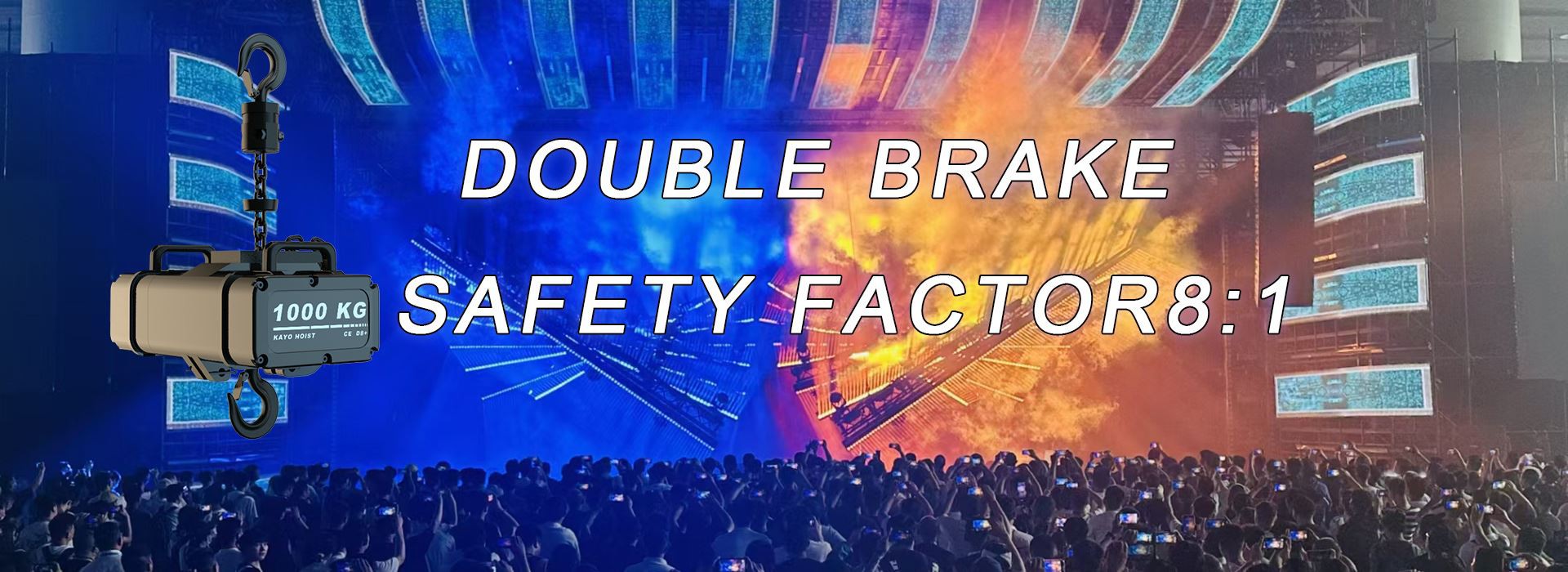
KAYO is a professional high-end lifting hoist production company, based on industrial hoist with wide series and competitive price ,we specialized in stage hoist with intelligent control of core design . integrating R&D, production, marketing, conceptual design and after-sales service. With the concept of safe lifting, durability as the purpose, according to international standards, safe and convenient will be integrated into it, creating ideal stage lifting tools for the majority of users.
FAQ
Q: What is a hoist cable?
A: Hoist cable is a strong, flexible wire rope used for lifting and lowering loads with a hoist.
Q: What materials are hoist cables made of?
A: Hoist cables are typically made of steel wires twisted or braided together for strength and flexibility.
Q: How do I determine the strength of a hoist cable?
A: The strength of a hoist cable is determined by its diameter, the type of steel used, and the number of wires in the rope.
Q: Can hoist cables be repaired if damaged?
A: Minor damage to hoist cables may be repaired, but severe damage usually requires replacement.
Q: What is the lifespan of a hoist cable?
A: The lifespan of a hoist cable depends on usage, maintenance, and the type of cable. Regular inspections are key to ensuring safety.
Q: How often should hoist cables be inspected?
A: Hoist cables should be inspected regularly, especially before each use, and after any incident that could have caused damage.
Q: What are the common causes of hoist cable failure?
A: Common causes include wear and tear, corrosion, overloading, and improper use or maintenance.
Q: Can hoist cables be used in extreme temperatures?
A: Some hoist cables are designed for use in extreme temperatures. Check the manufacturer's specifications for temperature ratings.
Q: How do I store hoist cables properly?
A: Hoist cables should be stored in a dry, well-ventilated area away from corrosive substances and excessive heat.
Q: What is the difference between galvanized and stainless steel hoist cables?
A: Galvanized cables have a zinc coating for corrosion resistance, while stainless steel cables are made of corrosion-resistant steel alloys.
Q: Can I use a hoist cable for pulling loads horizontally?
A: Yes, hoist cables can be used for both vertical lifting and horizontal pulling, depending on the application and cable specifications.
Q: How do I lubricate a hoist cable?
A: Lubrication of hoist cables is not typically required, as they are designed to operate dry. However, if specified by the manufacturer, use a recommended lubricant sparingly.
Q: What is the difference between single- and multi-strand hoist cables?
A: Single-strand cables consist of one layer of wires, while multi-strand cables have multiple layers for increased strength and flexibility.
Q: Can hoist cables be used in marine environments?
A: Yes, but special corrosion-resistant cables should be used in marine environments to withstand saltwater and other corrosive elements.
Q: What is the safe working load (SWL) of a hoist cable?
A: The SWL is the maximum load a hoist cable can safely handle without exceeding its designed strength. It is typically marked on the cable or specified by the manufacturer.
Q: How do I prevent kinking in a hoist cable?
A: Kinking can be prevented by proper spooling and storage techniques, as well as by avoiding sharp bends or twists during use.
Q: Can I use a damaged hoist cable if it's just for a light load?
A: No, using a damaged hoist cable, even for a light load, is unsafe and can lead to failure. Always replace damaged cables.
Q: What is the difference between a wire rope and a hoist cable?
A: Technically, a hoist cable is a type of wire rope specifically designed for use with hoists. The term "wire rope" is more general and can refer to any strong, flexible rope made of wires.
Q: How do I attach a hook or other fitting to a hoist cable?
A: Attaching fittings to a hoist cable should be done by a qualified professional using proper techniques and tools to ensure a safe and secure connection.
Q: Is it safe to use a hoist cable that has been sitting unused for a long time?
A: Before using a long-unused hoist cable, it should be inspected thoroughly for any signs of damage or deterioration. If any doubts exist about its integrity, it should be replaced.

 Language